Reading to your children — at home, or in class
The educational and developmental advantages for the child who is read aloud to and with are now very clear. In this post, I explain why reading aloud matters and share some great read-alouds.
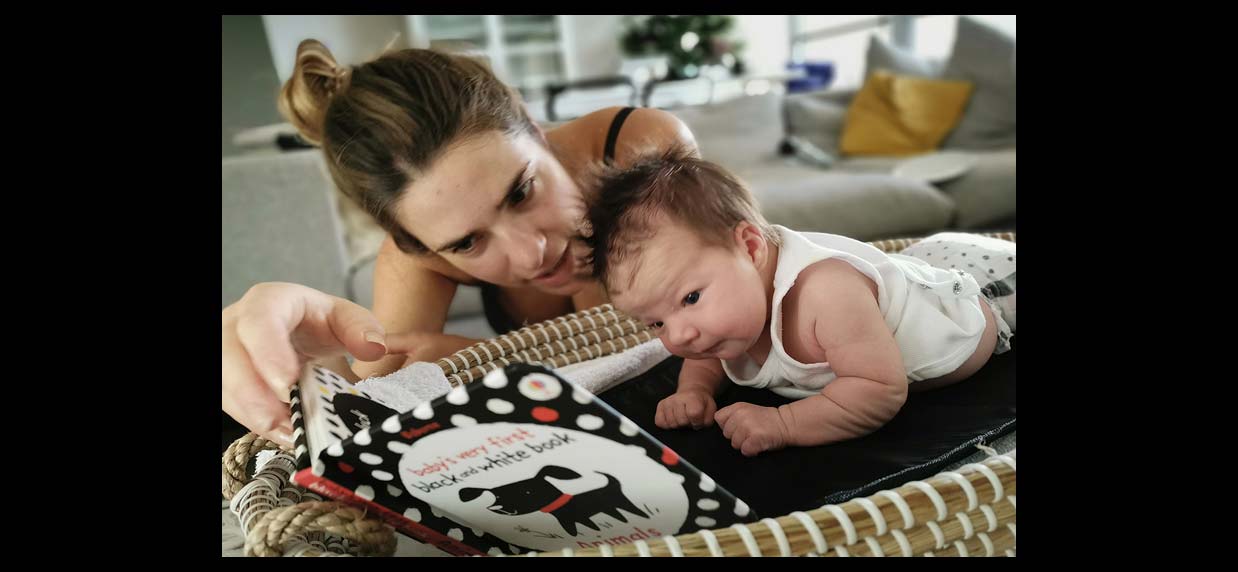
Mia and her mum reading together. Image credit: Photo by Bruce Foster. All rights reserved. Used with permission.
Why reading aloud matters
My belief in the benefits of reading aloud to one’s children is so entrenched I seldom examine it. The act of reading is something I live by — and the reading aloud I experienced both at home and at school was the foundation for that way of life. It’s good to have the opportunity to think harder about why I believe it’s so important.
The educational and developmental advantages for the child who is read aloud to are now very clear.
Habitually reading nursery rhyme, poetry, folk tale, pūrākau and story — along with conversation and oral stories of your life and the lives of your whānau — is the preeminent way of developing children’s capacity for language and thought. When you read to your children or students, they are experiencing over and over the astonishment of language: the sounds and shapes of words, the satisfactions of rhythm and rhyme, the exhilaration of being able to name what they know and feel, to compare and contrast, to connect. ‘The limits of my language mean the limits of my world,’ wrote the philosopher Ludwig Wittgenstein. When you regularly read and tell stories to children, their word bank grows exponentially; the greater that bank of words, the better their capacity to navigate and understand the world rushing into view.
Nurturing head and heart
When you read to children, they are deeply and happily engaged in learning. They are learning the shape and structure of story (and therefore, as Bruno Bettelheim pointed out, learning, in a profound way, the structure of human life: beginning, middle and end). They are learning about human motive and behaviour. About relationships. About places. About a great cavalcade of things, big and little. They are learning that books can reflect their own life (hey look: te maunga, kōtare, kuia, fale, fata tusi, selu, bus, apple, a grandmother, cats …) — an affirming and comforting experience. They are learning, too, that a book opens out onto new worlds (look: different skins, sounds, foods, clothes, beliefs, behaviour; deserts, snowy lands, infinity and beyond …) — a thrilling and challenging experience.
As our inaugural Te Awhi Rito Reading Ambassador, Ben Brown, declared powerfully, when you read to your kids,
‘You are showing them who they are, where they belong and how to communicate effectively with the world.’
— The power of story — reflections from Ben Brown
The child who has been read to regularly begins school with a terrifically well-stocked head and heart, a priceless foundation for all their subsequent learning.
The read-to child is also considerably more likely to become the successful and enthusiastic solo reader; they have learnt early and well that when you have a book, you are never alone. They have learnt that story and poetry will give them so much — adventure, escape, enlightenment, and solace.
Reading aloud just for pleasure
Of course, it’s encouraging to know that reading to your child is edifying and educational, but it seems to me just as important to know that reading together can be deeply pleasurable, for both the listening (and looking) child or group and — importantly — for the one reading aloud, too. There are great pluses for a parent or caregiver, older sibling, teacher or librarian in this two-way activity. It is certainly true that just as much as the children being read to, the person reading aloud can experience an enhanced state-of-being.
You drop everything else for five or ten minutes in the middle of your demanding day or evening, and for a period of time, it is just you, the absorbed children, and the enchantment of story and language.
It is a chance to be still and thoughtful.
For parents and caregivers, it is a chance for you and your child to be physically close — (which makes it an especially good thing to do with an older child who is moving away from the ready cuddle). Maybe the child is on your knee or leaning into you as you read to them on a sofa, at the table, in bed. There are multiple sensory pleasures and comforts to be had by both of you — your child listening to your voice, feeling your warmth and your familiar smell, knowing they’re safe (whatever is happening in the story, or has happened in their day) — and for you, of course, in all the same ways. This is a fundamental way of nurturing the connection between you and your listener(s), of building your relationships.
And listening to story, looking at illustrations are by no means passive acts. Indeed, extensive neuroscientific studies of children’s brains show that fabulous fireworks are going off in the brain when children are being read to and absorbing images. Their neural circuitry is firing, furious decoding and analogic thinking are at work, intuitive leaps are being made; the brain is being fantastically exercised and expanded — pinging back and forth between prior and new knowledge, building complexity and nuance, examining, comparing, critically assessing, making meaning.
Experience their responses
Reading to your child and your students also gives you the chance to experience their responses to story and language, to witness their growing understanding of the world unfolding around them, to see them connecting, little by little, the component parts of that world. From the first moment they learn how to turn a page, through their finishing of sentences in a well-loved text, to their observation of something in a story or picture that you haven’t noticed, reading together offers myriad examples of your children and students’ developing acuteness, insight, and emotional responses. Parents and children build a shared experience of stories and characters, words and places and events — something that deepens your connection and can be called on down the years. For teacher and children, it is pure pleasure, unattached to classroom work; a brief but potent shared experience, and one that bolsters all their other learning.
Not least, reading to your child means the chance to be surprised and amused, revived and comforted by the child’s-eye view of the world — bestowed by both the books and the children with you, responding to your reading. Amidst the demands and clutter of a busy adult life, it is consoling and revivifying to regularly re-enter the world of children’s stories and poetry and song, to be reacquainted with wonder and ways of seeing you may have forgotten but will surprise and amuse and provoke you all over again.
Provide access to books
I like to think there are some immensely practical benefits to reading aloud to your children, too. For one, it’s a leisure activity that costs very little. It’s fortunate for a child to be able to own books, of course, particularly their favourites (re-reading being an essential part of a rich reading life). But not everyone can afford to buy books. Everyone can have a library card, though — and thanks to the superb and diverse children’s collections in our public libraries, free access to reading-aloud material is abundant, seemingly endless. Happy news, too: library fines, a deterrent for so many, are now a thing of the past.
Lastly — but importantly! — I think of reading aloud as the ultimate trouble-shooter or pacifier. When disorder or conflict reigns at home — or in class — when everyone (including the adult) is beyond reason or can’t be mollified, sitting down with a book or two is the very best time-out. Everyone has a chance to calm down, to gather their resources and be gloriously distracted and restored by story and language and imaginative flight. When all else fails, sink into a sofa, or draw close to your gathered students, open the nearest book (perhaps one of my suggested read-alouds) and begin:
Old Hu-Hu flew to the moon and back …
Life used to be simple for Charlie …
Once there was a kuia who made mats and baskets …
I am Ivan. I am a gorilla. It’s not as easy as it looks …
This is a story about a boy called Pender and a kangaroo called Brindabella …
I flew our house
The other night.
It makes a lovely
Bright box-kite …
so much depends upon
a red wheel
barrow …
Odds are you’ll be as soothed by the sound of your reading voice as they are.
‘The single most important activity for building the knowledge required for eventual success in reading is reading aloud to children.’
— Anderson et al, 1985, Becoming a nation of readers: The report of the Commission on Reading
Read-alouds for home and the classroom
Schools and home educators can request books with links through National Library's school lending service.
Picture books
Island Storm
Island Storm by Brian Floca; illustrated by Sydney Smith; Candlewick Press, US.
Two siblings sense the onset of a storm and race outdoors to experience its gathering power, making it safely home just as the storm’s violence peaks. Rhythmic text and kinetic image brilliantly convey the excitement, peril, relief of the adventure, and the beautiful calm once the storm has abated.
Canadian Sydney Smith was the 2024 recipient of the Hans Christian Andersen Award for illustration. The international jury described his work as resembling ‘short musical memories’. His artwork channels a child’s-eye view and recall with a seeming simplicity, though it is, of course, a consequence of great technical skill and long practice. He uses colour most effectively — suggesting drama, movement, and the sensory world. His characters are ordinary children, always noticing, sometimes vulnerable, experiencing small but profound moments of recognition and understanding.
Small in the City
Small in the City by Sydney Smith; Groundwood Books, Canada.
A little child, rugged up in a snowstorm, walks through the city, between office buildings, down busy streets, all the while speaking as if to someone lost, reassuring them, giving guidance … This is a small journey with epic overtones, shifting perspectives and emotions — all heightened by exquisite artwork.
My Baba’s Garden
My Baba’s Garden by Jordan Scott; illustrated by Sydney Smith; Holiday House, US.
A young boy spends time before and after school with his grandmother — Baba — who demonstrates her love through warm presence, ritual, and the nourishment of home-grown food. Child and grandparent speak different languages, but their closeness is shown through gesture and action. In time, as the boy grows, he returns the act of love by bringing his Baba food and kisses. Richly coloured artwork with soft contours and the evocation of a warm sensory world underscore the narrator’s treasured memories.
Town Is by the Sea
Town Is by the Sea by Joanne Schwartz; illustrated by Sydney Smith; Groundwood Books, Canada.
A young boy’s day in a town beside a sunlit sea is powerfully contrasted with interior thoughts of his father beneath the sea, digging for coal. Dark and light; father and son; work and play; nature and industry. The line ‘And deep down under that sea my father is digging for coal’ is a sombre refrain, hinting at the boy’s inevitable future, but the illustrations tell a story of familial love, simple living, and the rhythms of the seasons.
Sidewalk Flowers
Sidewalk Flowers by JonArno Lawson, illustrated by Sydney Smith; Groundwood Books, Canada.
A wordless picture book in which a little girl collects wildflowers while walking with her distracted father. Each flower becomes a gift, some noticed, some not. Exquisite.
A Guide to Rocks
A Guide to Rocks by Sacha Cotter; illustrated by Josh Morgan; Huia Publishers, Aotearoa NZ.
Charlie’s feeling burdened, like he’s carrying a big rock. His dad says, ‘first rule is you don’t talk about rocks’. But Charlie’s rock gets heavier and heavier, his world darker and more difficult. He badly needs new rules … The story’s cleverly sustained metaphor (rocks = feelings) is wonderfully enlarged by a palette of dark and light, and images showing the sheer work of hefting ‘rocks’ …
See other titles by Sacha — including The Bomb; Dazzlehands; Keys — all in te reo Māori too.
The Kuia and the Spider
The Kuia and the Spider by Patricia Grace; illustrated by Robyn Kahukiwa; Puffin Books, Aotearoa NZ. Also available in te reo Māori: Te Kuia me te Pūngāwerewere.
The kuia and spider argue in their kitchen about their respective weaving prowess. They ask their visiting grandchildren to decide who is better, but the grandchildren are too busy enjoying each other’s company, their grandparents’ woven art, and the rituals of visiting. So, kuia and spider shift their focus to arguing about whose grandchildren are better … a warm, funny, near-fable that suggests the amiable squabbling of a long, intimate relationship and the bonds of family.
The illustrations honour te ao Māori: showing turangawaewae (sea, hills, flora, wharenui), whāriki and raranga work, the whakapapa and storytelling of kowhaiwhai, and the relationship between people and the natural world.
I Am So Strong
I Am So Strong by Mario Ramos; Gecko Press, Aotearoa NZ. Available in te reo Māori: Taku Toa Mārika.
A witty metafiction playing with the vanity and insecurity of the ‘big bad wolf’ and folk tale tropes … Wolf strides through the forest asking everyone he meets who is the strongest and toughest. Red Riding Hood, Three Little Pigs, Seven Dwarfs, et al, all agree Wolf is the very terror, but then Wolf meets the little toad … A fun accompaniment to old fairy tales.
See also: I Am So Handsome.
Brian Banana Duck Sunshine Yellow
Brian Banana Duck Sunshine Yellow by Chris McKimmie; Allen & Unwin, Australia.
A gloriously nutty story of identity and belonging, and a child’s anarchic view of the world. Brian spends weekends with his grandparents, who call him names embodying the colour yellow — Banana, Duck, and Sunshine. The most ordinary activities are transformed into whacko experiences by Brian’s ceaseless imagination. McKimmie’s illustrations are skillfully childlike and as wonderfully unruly as Brian’s inner world.
See also: Special Kev; Good Morning Mr Pancakes.
Hill and Hole
Hill and Hole by Kyle Mewburn; illustrated by Vasanti Unka; Puffin Books, Aotearoa NZ.
In the tradition of Fish is Fish (Leo Lionni), and a familiar theme of many children’s stories, two best friends, Hill and Hole, wonder, and then experience what it is to be the other. A sleek, lightly comic, delightful meditation on friendship and the nature of singularity and difference. The book’s design and Vasanti Unka’s illustrations amplify the philosophical text magnificently.
See also: Kiss! Kiss! Yuck! Yuck! (with Ali Teo & John O’Reilly); Luther and the Cloud-Makers (with Sarah Nelisiwe Anderson); Old Hu-hu (with Rachel Driscoll).
All the Dear Little Animals
All the Dear Little Animals by Ulf Nilsson; illustrated by Eva Eriksson; Gecko Press, Aotearoa NZ.
Three children decide to start an animal funeral business. Their clients range from household rodents and backyard hens to roadkill. Each child has their funeral role — the chief undertaker, the weeper, and the poet. A very funny evocation of childhood play, peer relationships, the sweetness and ruthlessness of the young, and then, the unexpected turn when a blackbird dies in front of them.
See also: Detective Gordon series.
Z Is for Moose
Z Is for Moose by Kelly Bingham; illustrated by Paul O Zelinsky; HarperCollins, US.
An alphabet, a stage show, a tender and amusing story of friendship, all in one. A book for all ages — playful, interactive, and laugh-out-loud.
See also (by Zelinsky) Swamp Angel; Rapunzel.
John’s Turn
John’s Turn by Mac Barnett; illustrated by Kate Berube; Candlewick Press, US.
A collective voice narrates the story of John’s preparation and nerves before dancing in front of the school. The simple, matter-of-fact sentences hint at so much, and the illustrations are masterful — showing John’s anxiety, doubt, tentativeness, and then his absorption and ecstasy as he performs. Adorable!
Sam & Dave Dig a Hole
Sam & Dave Dig a Hole by Mac Barnett; illustrated by Jon Klassen; Candlewick Press, US.
Another superb collaboration by Barnett and Klassen. Two young brothers dig a hole, hoping for something ‘spectacular’. Their dog and the reader are in on the brother’s oh-so-near misses. But a spectacular — and mysterious — event occurs anyway. A great book for discussion and speculation.
Twenty Questions
Twenty Questions by Mac Barnett; illustrated by Christian Robinson; Candlewick Press, US.
‘How many animals can you see in this picture?’ is question number 1 — suggesting a formula well-known to young readers — and the answer is clear. But the questions thereafter become much less straightforward — whimsical, philosophical, puzzling — and the answers depend on individual personality and speculation. Another excellent discussion starter.
So Many Wonderfuls
So Many Wonderfuls by Tina Matthews; Walker Books, Australia.
Matthews writes and illustrates this gentle, rhyming story of community life in a beach-side regional town in Aotearoa New Zealand. Inclusivity, community values, a celebration of small pleasures and enduring rituals. You can read The Little House by Virginia Lee Burton alongside and see who can spot Matthews’ tribute to that classic picture book.
See also: Out of the Egg; Let’s Bake a Cake; Waiting for Later.
Alphabet City
Alphabet City by Stephen T Johnson; Viking Penguin, US.
An alphabet book that invites close scrutiny to puzzle out how the 26 letters are represented in cityscapes. A celebration of city life and an invitation to be visually alert in the world. Brilliant mixed media artwork.
Poetry/language
Firefly Summer: A Year of Very Short Poems
Firefly Summer: A Year of Very Short Poems, selected by Paul Janeczko; illustrated by Melissa Sweet; Candlewick Press, US.
Janeczko uses the seasons as scaffolding and brevity as a parameter for his selections. The poets are American and all with the ability to write for — though not down — to children. Poems to drop into classroom ears at any time. Poems to talk about. Poems to use as writing models.
Fabulously illustrated by Melissa Sweet (Cricket in the Thicket: Poems About Bugs with Carol Murray; How to Read a Book with Kwame Alexander; How to Sing a Song with Kwame Alexander).
A Kick in the Head
A Kick in the Head, selected by Paul Janeczko; illustrated by Chris Raschka; Candlewick Press, US.
Here, Janeczko collects poems for young people across a range of forms: haiku, tanka, sonnet, ode, limerick, villanelle, opposites, found, and many more. Subjects and moods are varied. All great writing models. Raschka’s illustrations mix watercolour and washi paper …
all the small poems and fourteen more
all the small poems and fourteen more by Valerie Worth; pictures by Natalie Babbitt; Square Fish, USA.
Worth specialises in small poems for young people, often with animal subjects. I have used her poem ‘Dog’ (also featured in Love that Dog by Sharon Creech, a marvellous short verse novel) hundreds of times in classrooms — an achingly simple poem wrought with great skill and a fine lesson in close observation, careful word choice and distillation.
Other
Ten-Word Tiny Tales
Ten-Word Tiny Tales by Joseph Coelho and Friends; Bound to Stay Bound Books, US.
Former UK Children’s Laureate and poet Coelho gathers together illustrators from around the world to illustrate over double-page spreads his intriguing ten-word ‘tales.’ These are great discussion starters and prompts for creative writing and illustration. (There are creative writing suggestions at the end of the book, too.) All the tales set the imagination humming. My favourite: ‘We buried her on Wednesday, again on Thursday, and Friday’.
The Mysteries of Harris Burdick
The Mysteries of Harris Burdick by Chris van Allsburg; Houghton Mifflin Company, US.
Coelho must surely have been influenced by van Allsburg’s enduring classic. Allsburg illustrates his own eerie one-sentence story seeds with titles. He also invents an alter ego (Burdick) with a backstory to explain these ‘unpublished’ artworks and incomplete manuscripts. Particularly good for Intermediate writers and artists and collaborative projects.
See also: The Z was Zapped; Bad Day at River Bend; The Sweetest Fig.
The Word Spy
The Word Spy by Ursula Dubosarsky; illustrated by Tohby Riddle; Puffin Books, Australia.
A very entertaining and informative gallop through the English language and all its oddities. One chapter is titled: ‘Why is English So Strange?’! Duborsasky enlivens everything — silent letters, punctuation, the invention of printing, palindromes, oxymorons, cliches, and much, much more.
See also: The Return of the Word Spy.
Illustrated creative non-fiction
Unbound: The Life and Art of Judith Scott
Unbound: The Life and Art of Judith Scott by Joyce Scott & Brie Spangler; illustrated by Melissa Sweet; Random House Children’s Books, US.
Joyce Scott writes the very affecting story of her twin sister Judith — deaf and with Down Syndrome — who spent 35 years in an institution, uneducated and unstimulated, until Joyce became her legal guardian. Joyce introduced her sister to the Creative Growth Art Centre in Oakland, California; here she began a flourishing new life as a fibre artist. Her fibre sculptures are held in museums and galleries across the world. As ever, Melissa Sweet channels the world and art of her subject to deepen the story through illustration.
Dancing Through Fields of Colour
Dancing Through Fields of Colour by Elizabeth Brown; illustrated by Aimee Sicuro; Abrams, US.
The life of the determined, innovative 20th-century artist Helen Frankenthaler is vividly rendered through rich language and great splashes of watercolour in energetic illustrations. Colours jetéd across the painting, merged and connected, like rivers into oceans, colours into feelings. An inspiring story for nascent artists — and any child who wants to break out of the constraints of their particular world.
Omnibird: An Avian Investigator’s Handbook
Omnibird: An Avian Investigator’s Handbook by Giselle Clarkson; Gecko, Aotearoa NZ.
Educational, entertaining, a feast for the eyes, a treasure trove of observations and suggestions, and brimming with the author’s immersion in the natural world and her infectious desire to enthuse young readers. Full of fascinating facts, rich with humour and challenge for the reader. A great jumping-off point and model for young writers and artists in the classroom who want to write and draw their particular passions.
16 Words: William Carlos Williams & ‘The Red Wheelbarrow’
16 Words: William Carlos Williams & ‘The Red Wheelbarrow’ by Lisa Rogers; illustrated by Chuck Groenink; Random House Children’s Books, US.
A beautifully simple but freighted story about the inspiration for one of the 20th century’s most famous (and very short) poems. Rogers deftly demonstrates the intersections of the poet Williams’ working life as a doctor with his inner life as a poet. As much as anything, the book makes loud and clear that poetry — and all art — can arise from the simplest observations. A good message for young students!
Robinson
Robinson by Peter Sis; Thames & Hudson, UK.
The incomparable Sis fuses an incident from his childhood with his lifelong love of Robinson Crusoe to create a spectacularly illustrated imaginative journey that moves from rejection in the school playground to a lush tropical island and, ultimately, reconciliation with his friends. Spot the tribute to Maurice Sendak!
See also these titles: The Wall; Growing Up Behind the Iron Curtain; Nicky and Vera: A Quiet Hero of the Holocaust and the Children He Rescued; Tibet: Through the Red Box; The Tree of Life: Charles Darwin.
Looking at a number of Sis’s books together is a fruitful exercise. He has recurring themes and illustrative motifs across his books; his use of design and page structure is adventurous and inspiring for young readers and writers.
Cloth Lullaby: The Woven Life of Louise Bourgeois
Cloth Lullaby: The Woven Life of Louise Bourgeois by Amy Novesky; pictures by Isabelle Arsenault; Abrams, US.
Another childhood biography of a great 20th-century artist. Novesky shows the origins of Bourgeois famous works (eg: ‘Maman’, the giant bronze, steel & marble spider) in her early weaving lessons with her mother. The simple text is enriched by beautifully worked metaphors of thread, rivers, unspooling, and these are picked up with great skill by the Canadian illustrator Arsenault. A feast of colour, of the elements, and a touching mother-daughter relationship.
See also: Alpha by Isabella Arsenault — an intriguing alphabet book.
Fiction
Frindle
Frindle by Andrew Clements; illustrated by Brian Selznick; Turtle Back Books, US.
An evergreen read aloud. Nick sets out to prove his language arts teacher wrong about her beloved dictionary by inventing a new word: that thing you write with is no longer a pen; it is a frindle. Sly, pacy, funny, and a hymn to language.
The Experiment
The Experiment by Rebecca Stead; Text Publishing, Australia.
A page-turning story of a boy and his parents who are from an alien race, embedded in contemporary American society. When Nathan begins to question the reason for his life of subterfuge, things become very complicated. This story raises questions of agency, identity, morality. Good for intermediate upwards.
When You Reach Me
When You Reach Me by Rebecca Stead; Text Publishing, Australia.
Set in 1970s New York, this is a story of good and difficult times in friendship with a fabulous mystery at its heart. Brilliantly structured, accessible, and quietly thrilling. Approx. Year 6 up.
Ghost Kiwi
Ghost Kiwi by Ruth Paul; Scholastic, Aotearoa NZ.
Ruby and her friend Te Ariki discover a rare white kiwi chick living in their nearby forest. They quickly become embroiled in defending the chick against a posse of bird smugglers. Excellent writing, beautifully observed relationships, conservation values, and a good adventure. Approx. Years 5–8.
Rona
Rona by Chris Szekely; Huia Publishers, Aotearoa NZ.
Rona is a genuine scapegrace — bold, curious, competitive, and prone to tickings off; but she loves her grandparents and her teacher, Ms Himiona. Delightful, skilful, funny stories of everyday life with subtle emotional undertones. A NZ treasure. Approx. Years 3–5.
Awatea’s Treasure
Awatea’s Treasure by Fraser Smith; Huia Publishers, Aotearoa NZ.
A charming, often funny story of a young boy holidaying with his grandparents in the Far North. Awatea has adventures with a parrot, a haunted house, his raucous uncle, and possible treasure hidden by a mysterious boy. Approx. Years 4 up.
The Fat Man
The Fat Man by Maurice Gee; Puffin, Aotearoa NZ.
A New Zealand classic with a great opening line: ‘Colin Potter was a hungry boy …’ Set during the Depression of the 1930s. Colin is queasily fascinated by the enormously fat adult Herbert Muskie, who has returned to his town with revenge on his mind. An enthralling story of family and community secrets, violence, vulnerability and growing up. Year 7 up.
Small Change for Stuart
Small Change for Stuart by Lissa Evans; David Fickling Books, UK.
Stuart is 10, small for his age, with clever, unworldly parents. When the family shift to a new town, Stuart meets a mystery, learns of a disappeared uncle, and has a rollicking adventure tinged with magic. An hilarious, smart, crackingly paced story. Approx. Years 5–8.
See also the sequel: Big Change for Stuart; Wed Wabbit.
Evans is a genius.
High-Rise Mystery
High-Rise Mystery by Sharna Jackson; Knights Of, UK.
Sisters Nik and Norva find their community arts teacher murdered and decide to catch her killer. They identify suspects and motives, but everything is considerably more complicated than they anticipated. An urban setting, great characters and community, humour, snappy writing, good language, and a genuine whodunnit.
See also the sequel: Mic Drop: A High-Rise Mystery.
Where the World Ends
Where the World Ends by Geraldine McCaughrean; Usborne.
‘It was a blade-sharp August day, the sea burned black with the sun’s brightness. And no, there were no omens hinting at trouble ahead …’ It is 1727, and a group of men and boys from an island community travel to a remote sea stack for the traditional, annual harvest of birds. Only, this time, no one returns to collect them. A tense survival story — storms, starvation, sheer terror … McCaughrean is one of the great writers for children working today. Approx. Year 7 upwards.
See also these titles: Stop the Train!; Pull out all the Stops; The Kite Rider; The Positively Last Performance; Gold Dust; Tamberlaine’s Elephants. All fabulous.
The One and Only Ivan
The One and Only Ivan by Katherine Applegate; HarperCollins Children's Books, UK.
A brilliantly written story of a silverback gorilla’s captivity in a circus strip mall in the Nevada Desert. Ivan narrates his own life and offers the reader/listener a unique perspective on humans that is both touching and challenging. When the mall cleaner’s daughter, Julia, makes friends with Ivan, his prospects begin to change.
A sobering, funny, unforgettable read-aloud.
There’s a Boy in the Girls’ Bathroom
There’s a Boy in the Girls’ Bathroom by Louis Sacher; Bloomsbury, UK.
Bradley Chalkers tells lies, picks fights with girls, and bullies the (adorable!) new boy. His teachers find him impossible. So does his family. At home, he talks mostly to his collection of little animals, the only audience that understands him. But, astonishingly, the new boy Jeff Fishkin insists on being his friend. And then Bradley meets Carla, the school counsellor … Painfully hilarious and tear-jerking. A wonderful study of vulnerability and yearning. Approx. Year 5 upwards.
Crash
Crash by Jerry Spinelli; Penguin Random House, Aoteaora NZ.
The story behind another fictional bully. Crash Coogan is a football jock with attitude. He’s been running over people one way or another all his life, especially nerdy, vegetarian Penn Webb, who lives down the road. But Penn has something that Crash wishes for himself, though fears he will never attain. Crash tells his own story — it’s a first-class glimpse into a lonely child with a secret. Also, very funny. Approx. Year 6 up.
Brindabella
Brindabella by Ursula Dubosarsky; Allen & Unwin, Australia.
‘This is a story about a boy called Pender and a kangaroo called Brindabella, about how they became friends, and all the things that happened to them because of it …’ So begins Dubosarsky’s delicious story of friendship, threat, and coming to understand life’s blessings and sadnesses. The ‘fierce beauty’ of the Australian bush is a treat to explore, too. Year 4 up.
Just Juice
Just Juice by Karen Hesse; Scholastic Press, US.
Juice lives way out in the hills with her Ma and Pa and four sisters. She has to repeat third grade because she’s no good at reading or number work. Pa can’t read either. But then an official-looking letter arrives, and problems start to pile up for the family. A gentle story, exploring a family’s way of life, the road to understanding yourself, and the importance of kind adults in a child’s life. Year 4 up.
See also: Out of the Dust; Litters to Rifka; The Music of Dolphins.
The Road to Ratenburg
The Road to Ratenburg by Joy Cowley; Gecko Press, Aotearoa NZ.
Spinnaker Rat must lead his family on a long journey to the fabled city of Ratenburg. But the adventure brings hazards of all kinds — predators, traps, perilous crossings. It also bestows courage, family bonding, and lessons about inner character and community. A pacy, amusing travel story with an excellent cast of characters. Perfect read-aloud. Year 4 up.
The Ghost House
The Ghost House by Bill Nagelkerke; Ahoy, Cuba Press, Aotearoa NZ.
David’s family move to a house on the edge of the Red Zone in Ōtautahi Christchurch. David’s unwell, and his parents have forbidden him to explore the Red Zone wilderness, but he goes there anyway and discovers an old villa, protected by trees. The house begins to speak to him … A book full of mystery and memory, and what we leave behind when disaster strikes. Years 5/6.
Runaway Robot
Runaway Robot by Frank Cottrell-Boyce; Macmillan Children’s Books, UK.
Another exemplary, big-hearted, comical story from the current UK Children’s Laureate. Alfie has a robotic hand, which he loses at the airport; in the Lost Property, he finds a one-legged robot. Eric’s nearly a hundred years old but believes he’s the last word in up-to-date technology. Alfie and Eric become friends, but Eric’s superstrength is creating problems … What can Alfie do? Laugh out loud, full of incident and a great sense of humanity.
See also these titles: Millions; Framed; The Astonishing Broccoli Boy.
Find out more
Ben Brown — Te pānui o Te Awhi Rito: Te hā, te kupu, te kōrero — Ben Brown reflects on the power of stories and sharing them with children.